
Source: Gavan Nolan, credit analyst, Markit
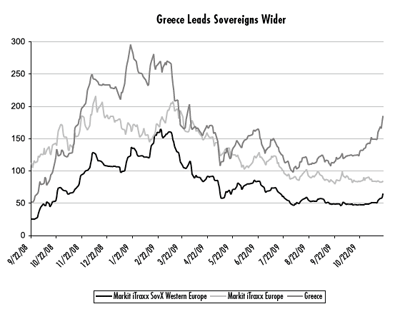
The difference between sovereign and corporate CDS spreads in Europe reached its tightest point since February this week as public finances came under increasing scrutiny. Greece saw its CDS spreads widen sharply to 185bp, dragging the rest of Europe with it. At the beginning of August, sovereign CDS on Greece sat at 100bp.
Those countries most affected by the widening were the high beta-names that tend to follow the trend when spreads blow out: namely, Ireland (170bp), Italy (92bp) and Spain (87bp). CDS on Spain is now trading wider than the Markit iTraxx Europe index, or ‘Main’, for the first time on record. The Main index has been trading in the 82-85bp range this month, close to its recent tight levels.
The Markit iTraxx SovX Western Europe hit 65 basis points as Derivatives Week went to press Thursday, its widest level since it began trading in September. Only a week before the SovX was trading at 50 bps. The jump is all the more surprising given the comparative solidity and bullish sentiment in the corporate CDS market, where spreads are tightening.
If risky assets like stocks or corporate bonds, driven by a weak U.S. dollar, are rallying, why is sovereign debt under such pressure? It is no secret that many governments are running large budget deficits. Last Friday, E.U. figures confirmed that Greece is still in recession and the Organization for Economic Co-Operation and Development forecast Thursday that the Greek economy will continue to shrink in 2010. The government acknowledged that its deficit will hit 12.7% of GDP this year, the largest in the eurozone. This figure was a significant revision from its previous estimate, and scepticism about the accuracy of government statistics has contributed to negative sentiment.
There are also concerns about Greece’s banking system. The Bank of Greece issued a statement advising the country’s banks to “show restraint” at the next tender for 12-month European Central Bank funding. Greek banks have been the most active at the last two auctions, and the upcoming 12-month tender could be the last. The ECB has signalled that it will withdraw extraordinary liquidity facilities in the near future, an action that could cause problems in the weaker banking market.
 |